CRM platforms can be applied in numerous ways to enhance comprehensive patient healthcare delivery.
1. Better Organization
Organizing health records remains a major challenge. Although electronic health records (EHRs) are widely used by providers, their ability to structure data and enable seamless access is still limited. From the patient’s perspective, Salesforce has found that more than half of patients remain unclear about how to access their personal medical records.
A healthcare CRM platform can securely store, organize, and retrieve EHRs as well as various other types of records. With easier access to information, the overall patient experience is significantly improved, while unnecessary anxiety and confusion are greatly reduced.
2. Improved Communication
Communication is clearly the most critical factor in building strong relationships with patients. While in-person visits are essential, alternative communication channels are equally important. In the insurance sector, 70% of patients state that they prefer to communicate via text messaging, and 57% expect access to live chat and fast responses.
Healthcare CRM platforms establish clear, well-organized communication channels. Healthcare organizations gain deeper insights into patients, staff, and customers by enabling fast, seamless interactions across appropriate channels.
3. Real-Time Feedback
Any organization aiming for continuous improvement and sustainable growth values customer feedback, and healthcare organizations are no exception. Maintaining post-treatment engagement and sustaining a feedback loop helps patients feel heard and respected, which in turn fosters long-term loyalty.
Timely, direct feedback also enables healthcare organizations to improve holistically. This type of feedback highlights existing weaknesses and helps organizations implement the necessary changes to innovate and operate more effectively.
Healthcare providers can leverage healthcare CRM solutions to accelerate seamless feedback processes. These platforms automate feedback collection, freeing up resources to focus on critical priorities such as improving patient health, customer support, and overall care quality.
4. Creating More Room for Innovation
Beyond supporting the collection, storage, and utilization of feedback, healthcare CRM platforms enable innovation through mobile application integration. Healthcare organizations that develop mobile apps can create enhanced patient experiences by collecting more valuable data, supporting smarter decision-making, and personalizing patient journeys.
Leading companies in healthcare services and life sciences recognize the importance of timely customer engagement and use healthcare CRM platforms as the core of their operations. UnitedHealthcare, a subsidiary of a global healthcare technology solutions provider, has leveraged CRM capabilities to scale and thrive in today’s digital landscape.

Healthcare CRM: Turning Patient-Centric Care into Reality
Success factors for healthcare service providers differ significantly from those in insurance, pharmaceutical, or medical device companies. To fully leverage CRM capabilities, healthcare organizations must select solutions that truly align with their industry-specific needs.
Not all CRM solutions deliver the same impact. Given the highly sensitive nature of patient communications and medical records, healthcare CRM providers must demonstrate deep industry expertise and the ability to address complex healthcare-specific challenges.
CRM is often the next critical system healthcare organizations adopt after implementing hospital management systems or basic patient information management software—serving as a key step toward patient-centric care and elevated healthcare experiences.
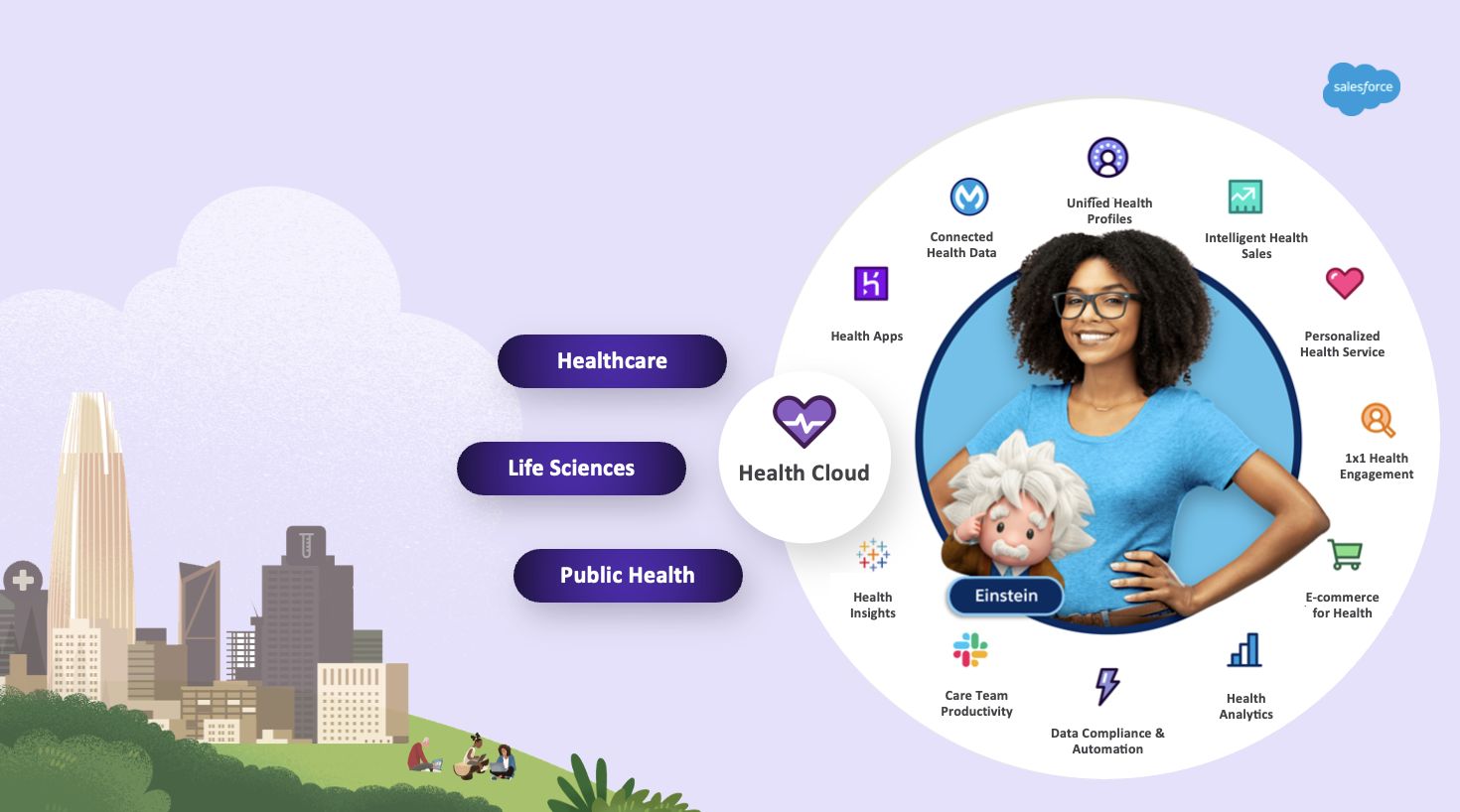
Salesforce is the world’s leading CRM technology provider, delivering industry-specific solutions to more than 150,000 businesses globally. Salesforce Health Cloud is designed to strengthen connections with patients by unifying data on a single platform.

By consolidating information into one centralized system, every stage of the patient journey is enhanced—from intake and medical record creation to patient management services and care improvement. At the same time, pharmaceutical companies and healthcare service providers benefit from customized solutions that connect their entire ecosystem and accelerate R&D processes.