In today’s purchasing environment, customers no longer make decisions based on a single interaction with a business. Before choosing a product or service, they often go through multiple stages, including recognizing their needs, searching for information, comparing solutions, communicating with businesses, and evaluating their experience after purchase.
This requires businesses to gain a deeper understanding of how customers interact with their brand throughout the decision-making process. Instead of focusing only on individual touchpoints, businesses need to look at the entire journey that customers go through.
This is why a Customer Journey Map has become an important tool that helps businesses analyze customer experiences, identify areas for improvement, and develop more effective engagement strategies.
A well-developed Customer Journey Map not only supports marketing and sales activities but also helps businesses optimize operations, improve customer satisfaction, and build long-term relationships with customers.
What is a Customer Journey Map?
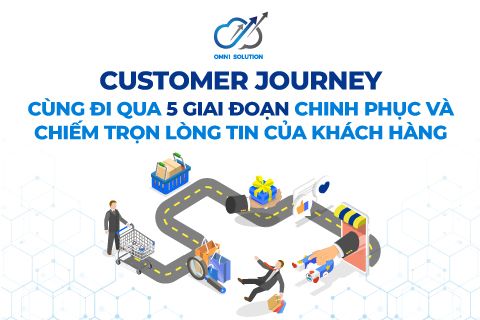
A Customer Journey Map is a visual tool that illustrates the entire process customers go through when interacting with a business, from the first stage of recognizing a need to post-purchase activities and continued product or service usage.
Through this map, businesses can understand customer actions, thoughts, emotions, and challenges at each stage of the journey.
A Customer Journey Map typically includes several key elements:
Customer journey stages:
Including awareness, consideration, purchase decision, product usage, and relationship retention stages.
Customer touchpoints:
The points where customers interact with a business, such as websites, emails, sales representatives, social media, or customer support teams.
Customer needs and expectations:
The goals and outcomes customers want to achieve at each stage of their journey.
Pain points:
Challenges that interrupt the customer experience or influence their purchasing decisions.
By understanding these elements, businesses can make appropriate adjustments to create a more consistent and seamless customer experience.
Why Should Businesses Build a Customer Journey Map?
Many businesses today invest heavily in marketing, sales, or customer service but still do not fully understand what customers experience throughout their interactions with the brand.
Without a complete overview, businesses may develop strategies based on assumptions rather than actual customer behaviors.
Building a Customer Journey Map helps businesses:
Understand customer behaviors and needs:
Businesses can identify where customers search for information, what influences their buying decisions, and what factors make them hesitate.
Identify areas for experience improvement:
Steps that create difficulties or increase customer drop-off can be recognized more clearly, allowing businesses to optimize the journey.
Improve collaboration between departments:
When marketing, sales, and customer service teams share the same customer journey perspective, coordination becomes more consistent and effective.
Increase conversion rates and customer retention:
A smooth, clear, and relevant journey helps customers make decisions more easily.
Customer Journey vs Customer Journey Map: What is the Difference?
Although often used together, Customer Journey and Customer Journey Map refer to two different concepts.
A Customer Journey is the actual experience customers go through when interacting with a business. It includes all thoughts, actions, and emotions customers experience before, during, and after making a purchase.
For example, a customer may begin their journey by searching for information on Google, reading articles, requesting a consultation, communicating with sales representatives, trying a product, and eventually making a purchase decision.
Meanwhile, a Customer Journey Map is a tool that helps businesses visualize this journey.
In other words, Customer Journey represents the actual customer experience, while Customer Journey Map is the framework used to analyze and improve that experience.
Businesses need Customer Journey Maps to clearly identify touchpoints, emotions, and challenges within the Customer Journey, allowing them to develop more suitable optimization strategies.
What Makes a B2B Customer Journey Different?
In a B2B environment, the customer journey is often more complex than B2C because purchasing decisions usually involve multiple individuals and departments.
A business may need time to evaluate its needs, compare vendors, analyze costs, review implementation capabilities, and receive approval from multiple stakeholders before reaching a final decision.
Therefore, B2B customer journeys often involve more touchpoints and require businesses to adopt appropriate approaches at each stage.
A typical B2B customer journey may include:
Problem identification:
The business recognizes challenges in operations, management, or growth and begins searching for solutions.
Research and evaluation:
Customers explore different options, consider vendors, and evaluate suitability.
Consultation and solution discussion:
Sales teams participate in understanding customer needs, proposing solutions, and addressing customer concerns.
Decision-making:
Stakeholders agree on the approach, budget, and proceed with contract signing.
Implementation and relationship expansion:
After purchase, customers continue evaluating effectiveness and may expand the partnership.
For B2B, businesses not only need to focus on closing deals but also need to create a seamless experience throughout the entire partnership journey.
How to Build an Effective Customer Journey Map
An effective Customer Journey Map should reflect the actual customer experience rather than simply describe internal business processes.
1. Define the Target Customer Persona
Before creating a journey map, businesses need to understand who they are serving.
Factors to analyze may include customer needs, goals, challenges, purchasing behaviors, and factors influencing their decisions.
Accurately defining customer personas helps businesses create a more realistic and valuable journey map.
2. Identify Customer Touchpoints Throughout the Journey
Customers may interact with businesses through various channels. Each touchpoint can influence their perception and overall experience.
Businesses need to review the entire process, from the moment customers discover the brand, search for information, communicate with sales, to the stage where they use the product.
Clearly identifying touchpoints helps businesses discover steps that create difficulties or reduce conversion opportunities.
3. Analyze Customer Emotions and Challenges
A Customer Journey Map should not only record what customers do but also reflect how they feel at each stage.
Customers may be interested in a product but still lack enough trust to make a purchase. Or they may be satisfied when signing up for a service but encounter difficulties during implementation.
These insights allow businesses to develop more accurate solutions for improving customer experience.
The Role of CRM in Optimizing Customer Journeys
As the number of customers increases, businesses may struggle to track the entire interaction history if they rely only on manual methods.
CRM helps businesses centralize customer data, monitor behaviors, and manage touchpoints throughout the journey.
With CRM, businesses can:
- Understand customer interaction history.
- Personalize content and engagement strategies.
- Track sales and customer service progress.
- Improve experiences based on real customer data.
When combining Customer Journey Maps with CRM, businesses can move from a reactive approach to a proactive approach by predicting customer needs and continuously improving experiences.
Common Mistakes When Building a Customer Journey Map
Some businesses create Customer Journey Maps but fail to achieve the expected results because they only view the journey from an internal perspective.
Common issues include:
- Focusing only on sales processes instead of actual customer experiences.
- Failing to update the journey map when customer needs and behaviors change.
- Lacking real customer data.
- Not connecting the Customer Journey Map with marketing, sales, and customer service activities.
A Customer Journey Map only creates real value when it is used as a continuous improvement tool.
Customer Journey Map – The Foundation for Better Customer Experience and Sustainable Growth
In today’s competitive environment, businesses need to understand not only what customers want to buy but also why they choose a solution, what makes them satisfied, and what factors influence their decisions.
A Customer Journey Map helps businesses view the entire experience from the customer’s perspective, optimize each touchpoint, and build more effective engagement strategies.
Especially in B2B customer journeys, where purchasing processes are longer and involve multiple stakeholders, building a structured Customer Journey Map helps businesses create consistent experiences, improve conversion rates, and develop long-term customer relationships.