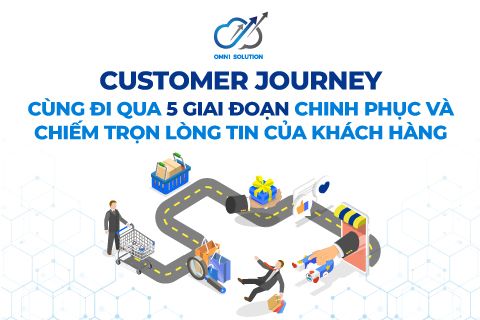
In today’s business environment, customers no longer make decisions based on a single interaction point. Before purchasing a product or using a service, they usually go through multiple stages, such as researching information, comparing options, interacting with a business, and evaluating their experience after purchase.
This requires businesses to understand the entire customer journey instead of focusing only on the final sales stage. Customer journey mapping has become an important tool that helps businesses visualize how customers interact with their brand, identify challenges at each stage, and improve the overall customer experience.
A well-developed customer journey map not only supports marketing and sales activities but also helps businesses optimize operations, increase customer satisfaction, and build long-term relationships.
What is Customer Journey Mapping?
Customer journey mapping is the process of creating a visual representation of the entire journey customers go through when interacting with a business. This map illustrates different stages, from when customers recognize a need, explore solutions, make purchasing decisions, to when they use the product and maintain an ongoing relationship with the brand.
Instead of only looking from the business perspective, customer journey mapping focuses on the actual customer experience. It helps businesses understand what customers think, where they face challenges, and what factors influence their decisions.
A customer journey map usually includes several key elements:
- Customer journey stages: From awareness, consideration, and purchase to post-purchase experiences.
- Touchpoints: Places where customers interact with a business, such as websites, emails, sales representatives, or social media channels.
- Customer emotions and expectations: How customers feel throughout each stage of the journey.
- Pain points: Issues that interrupt the customer experience or affect their buying decisions.
By analyzing these elements, businesses can identify opportunities to create a more consistent and effective customer experience.
Why is Customer Journey Mapping Important for Businesses?
Many businesses today invest heavily in products, marketing, and sales but still do not fully understand what customers experience before making a purchase. This can lead to strategies based on assumptions rather than real customer data.
Customer journey mapping allows businesses to view the entire process from the customer’s perspective. As a result, different teams can collaborate better and focus on the factors that directly influence customer experience.
Some key benefits of customer journey mapping include:
- Understanding customer behavior: Businesses can identify where customers search for information, what challenges they face, and what influences their decisions.
- Improving customer experience: Friction points throughout the journey can be discovered and optimized.
- Enhancing marketing and sales effectiveness: Content, messaging, and engagement strategies can be adjusted based on each customer stage.
- Increasing customer retention: A smooth and consistent journey helps build trust and long-term relationships.
B2B Customer Journey Mapping
In a B2B environment, the customer journey is often more complex because purchasing decisions are rarely made by only one individual. They may involve multiple stakeholders, including end users, managers, finance teams, and business leaders.
Therefore, B2B customer journey mapping requires deeper analysis of the evaluation, approval, and implementation processes within an organization.
A typical B2B customer journey often includes several stages:
- Problem identification: The business recognizes challenges related to operations, management, or growth.
- Solution discovery: Customers begin researching vendors, technologies, or potential approaches.
- Evaluation process: Stakeholders assess costs, implementation capabilities, suitability, and long-term benefits.
- Decision-making: The organization selects a solution and moves forward with implementation.
- Relationship expansion: After adoption, customers evaluate performance and decide whether to continue the partnership.
Unlike B2C, B2B customer journey mapping requires attention to more touchpoints, especially consultation, product demonstrations, negotiations, and post-sales support.
Steps to Build an Effective Customer Journey Mapping Strategy
An effective customer journey map needs to reflect real customer behavior rather than simply describing internal sales processes. Businesses can build a customer journey map through the following steps:
1. Define Target Customer Personas
Before creating a journey map, businesses need to clearly understand who they are serving. Identifying the right customer groups helps make the analysis more accurate and relevant.
Important factors to consider include:
- Customer characteristics or company profiles.
- Main needs and business objectives.
- Challenges they are facing.
- Factors influencing their purchasing decisions.
2. Identify Customer Touchpoints
Customers may interact with a business through multiple channels, and each touchpoint can influence their perception of the brand.
Businesses should analyze the entire journey, including:
- The first time customers discover the brand.
- The process of researching information.
- Conversations with sales or consulting teams.
- Product implementation and usage stages.
Clearly identifying touchpoints helps businesses discover areas that create friction or reduce conversion opportunities.
3. Analyze Customer Emotions and Challenges
A customer journey map should not only record customer actions but also reflect the emotions behind those actions.
For example, customers may be interested in a product but still feel uncertain about making a purchase. Or they may be satisfied when signing up for a service but experience difficulties during implementation.
Understanding these emotions allows businesses to create more accurate solutions to improve customer experience.
How Does Customer Journey Mapping Work with CRM?
Customer journey mapping becomes more effective when combined with a CRM system. CRM helps businesses store customer interaction data and track customer behavior throughout their journey.
When these two elements work together, businesses can:
- Monitor customer interaction history across multiple channels.
- Personalize content and customer engagement activities.
- Identify the right time for sales teams to reach out.
- Measure the effectiveness of each touchpoint.
As a result, businesses can not only understand customers better but also proactively improve customer experience over time.
Common Mistakes When Building a Customer Journey Map
Although customer journey mapping provides significant value, some businesses fail to achieve the expected results because they create maps based mainly on internal assumptions.
Common mistakes include:
- Focusing only on the sales process instead of the actual customer experience.
- Failing to update the journey map as customer behaviors change.
- Lacking real customer data and insights from different departments.
- Not connecting the customer journey map with marketing, sales, and customer service activities.
A customer journey map becomes truly valuable when it is used as a continuous improvement tool rather than a one-time document.
Customer Journey Mapping – The Foundation for Better Customer Experience
As customers continue to expect more personalized and seamless experiences, businesses need to understand the journey customers go through in order to create meaningful interactions.
Customer journey mapping helps businesses view their activities from the customer’s perspective, identify improvement opportunities, and build more effective engagement strategies.
Especially in B2B environments, where purchasing decisions take longer and involve multiple stakeholders, implementing B2B customer journey mapping helps businesses create a competitive advantage through consistent, personalized, and valuable customer experiences.